When to stop mowing in Rockford, and what the last cut should be
The date on the calendar is the wrong signal. The grass is still growing well after most people have put the mower away.
September 17, 2026 · 4 min read
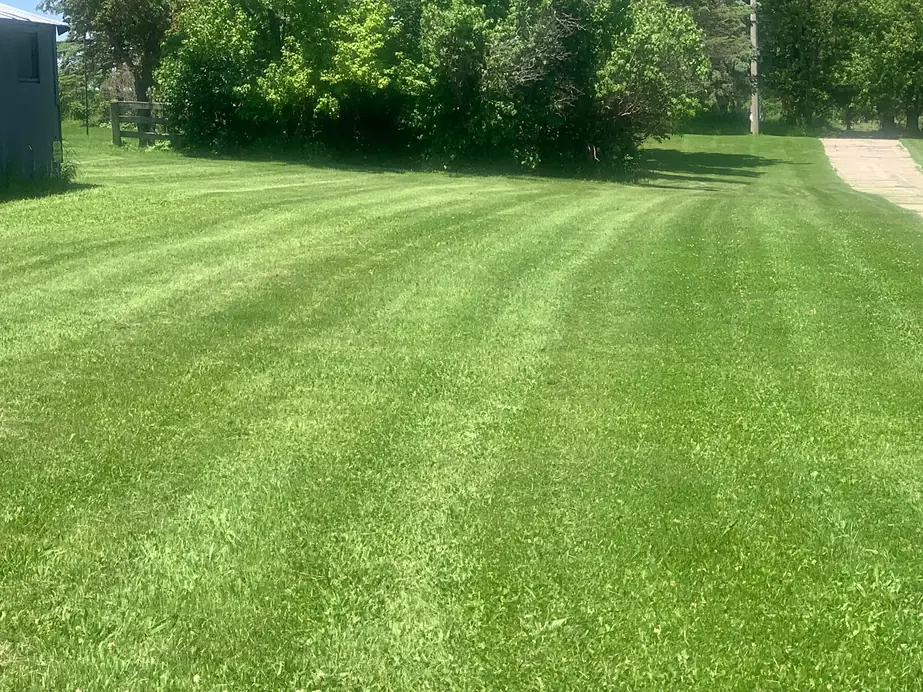
Every autumn we get the same question from customers around Rockford, usually in the second week of October: is that it until spring? The honest answer is almost always no, and the people who stop too early are the ones ringing us in April asking why the lawn looks grey and matted.
Cool season grass, which is what nearly every lawn in Winnebago County is, does not shut down when the air gets cold. It shuts down when the soil gets cold. Those are two different things and they can be weeks apart, because soil holds heat much longer than air does.
The signal to watch is growth, not temperature
Forget trying to remember a date. The only thing that matters is whether the grass is still putting on height. If you can look across the lawn a week after a cut and see that it has grown, it still needs mowing. When you look a week later and it is essentially where you left it, the lawn has stopped and so can you.
In a normal Rockford year that point lands somewhere in early to mid November, well after the leaves are down and well after most people have stopped. In a mild autumn it can run later. In a year that turns hard and early it comes sooner. That variability is exactly why a fixed end date is a bad plan.
There is one thing worth adding to the watching. Grass carries on growing while the soil sits above roughly ten degrees Celsius, or about fifty Fahrenheit, and the top few inches of soil stay there a surprisingly long time after the first frost. A frost on the lawn in the morning does not mean the season is over.
Why the last cut should be lower, and only the last one
Through the season we mow high, because a longer leaf shades the root zone and keeps the lawn from burning off in July. The final cut of the year is the one exception. Taking that last one down a notch, not scalped, just shorter, leaves less leaf lying flat under snow.
Long grass under a winter snow load folds over, mats down, and stays wet and dark for months. That is the ideal environment for snow mould, which you find in spring as circular grey or pinkish patches that look like the lawn has been left under a tarpaulin. Shorter grass going into winter mats far less.
The mistake is doing this too early or doing it every time. A lawn cut short in September has no shade on its roots through the last warm spell and no time to recover before dormancy. One lower cut, at the end, is the whole trick.
The leaves matter more than the grass
If you only do one thing before winter, get the leaves off. A packed wet leaf layer acts like a lid: it holds moisture against the crown of the plant, blocks light completely, and stays cold long after the rest of the lawn has dried out. Snow on top presses it down and seals it.
You will not see the damage in November. You see it the following April, as grey matted patches in precisely the shape of where the leaves sat, which is usually along the fence line and under whichever tree drops last. Those patches are thin, slow to recover, and they are exactly where weeds get their opening for the year.
A light scattering of leaves can be mulched into the lawn with a mower and does some good. A real cover cannot. The rough test is whether you can still see grass through them. If you cannot, mowing over them is not going to deal with it.
Four things worth doing on the way out
- Get the leaves off, properly, rather than mulching a cover that is too thick to break down.
- Take the final cut a notch lower than your summer height, but only the final one.
- Clear the gutters while you are at it, because what comes out of them in a January thaw ends up on the lawn anyway.
- Note where water stood after the last heavy rain. That is your list for aerating in spring.
What autumn is actually the best time for
Autumn in northern Illinois is the single best window of the year for aerating and for overseeding, better than spring, and most people miss it. The soil is still warm enough for roots and seed to get going, the air is cooler so nothing is heat stressed, and the weed pressure that swamps a spring seeding has largely gone.
If your lawn has thin patches you have been meaning to deal with, or areas that go hard and compacted where people walk, the work done in September and October gets a head start that the same work in May simply cannot match.
If you would rather not judge any of this yourself, that is a large part of why our customers keep us on through the autumn rather than stopping in September. We are watching the growth on your property anyway, and the last cut happens when the lawn says so.
A & A LawnCare, (815) 904-6299
Call (815) 904-6299More articles
Why your lawn goes thin in the same three places every year
If the same patches fail every summer, feeding the whole lawn is not going to change it.
Getting a property ready to list: the outdoor jobs that actually move photos
Buyers decide from a thumbnail. Almost everything that decides the thumbnail is outdoors.